Wednesday, February 11
My Cart10:30 AM – 11:30 AM
The Professional Seal: Authentication, Accountability, and Assurance
ConEd Credits: AIBC 1 Core
Location: Level 2: Room 221
- Architecture
- Construction & Trades
- Engineering
- Homebuilding & Renovation
- Economics, Legal, Regulatory & Risk Management
Building Type: Commercial, Industrial, Institutional, Mixed-Use, Residential: Multi-Unit, Residential: Single-Unit
Partners: EGBC
Join us for a joint presentation by the AIBC and Engineers and Geoscientists BC to discuss professional seals and what to look for when accepting documents sealed by an architect or a professional engineer. As recent cases of fraudulent seals highlight, it is important for builders, owners, project managers, and authorities having jurisdiction to understand what to look for in relation to sealed documents. This presentation will talk through the history of the professional seal, the evolution from strictly manual seals to the modern option of digital authentication with the use of digital certificates, and highlight key things to look for when accepting documents using each option.
Speakers
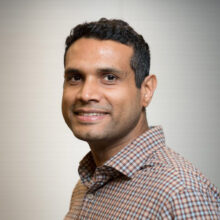
Harshan Radhakrishnan Manager, Climate Change and Sustainability Initiatives, Engineers and Geoscientists BC
Harshan is the Acting Manager, Professional Practice Advice Program at Engineers and Geoscientists BC (EGBC), where he leads a team that provides professional practice advice on a wide range of regulatory, ethical, and practice-related inquiries. He has considerable experience in the regulation of the engineering and geoscience professions, professional development, policy development, and sustainability. At EGBC, Harshan has led the development of numerous professional practice guidelines spanning topic areas such as built environment, natural hazards, and climate resilience across various engineering and geoscience disciplines.

Maura Gatensby Lead Practice Advisor and Regulatory Liaison, Architectural Institute of British Columbia
Maura Gatensby is currently Lead Practice Advisor and Regulatory Liaison with the AIBC. She is a former vice-chair of the BC Building Code Appeal Board, and currently a member of the BC Energy Step Code Council.
- Regular
- $85
Presenting Partner

1:00 PM – 2:00 PM
Lessons Learned: Climate Resilience Training for Building Sector Professionals
ConEd Credits: 1 BOMI CPD; AIBC 1 Core; BC Housing 1 CPD (Construction management and supervision)
Location: Level 2: Rooms 218/219
- Architecture
- Construction & Trades
- Property Management & Building Operations
- Engineering
- Homebuilding & Renovation
- Sustainability, Carbon Management & High-Performance Buildings
Building Type: Commercial, Institutional, Mixed-Use, Residential: Multi-Unit
Partners: EGBC
With support from Natural Resources Canada, Engineers and Geoscientists BC and the Climate Risk Institute launched the Climate Resilience Training Program for Building Sector Professionals to help integrate climate risk into planning and design for Part 3 buildings. After a pilot and two full sessions, this presentation shares lessons learned from delivering the program. Topics include why prescriptive solutions fall short, how cognitive biases influence decision-making, and the challenge of interpreting climate science before designing solutions. The session will explore what worked, what didn’t, and what this means for future training and practice. Attendees will gain strategies for embedding climate resilience in projects and understand implications for codes, standards, and professional practice.
Speakers
Harshan Radhakrishnan Manager, Climate Change and Sustainability Initiatives, Engineers and Geoscientists BC
Harshan is the Acting Manager, Professional Practice Advice Program at Engineers and Geoscientists BC (EGBC), where he leads a team that provides professional practice advice on a wide range of regulatory, ethical, and practice-related inquiries. He has considerable experience in the regulation of the engineering and geoscience professions, professional development, policy development, and sustainability. At EGBC, Harshan has led the development of numerous professional practice guidelines spanning topic areas such as built environment, natural hazards, and climate resilience across various engineering and geoscience disciplines.

Robert LePage Founding Principal, Climate Resilience Specialist, Climes Group Engineering Inc.
Robert LePage is the founder of Climes Group Engineering Inc., a firm dedicated to advancing climate-resilient buildings. With a strong background in building science, Rob holds a B.A.Sc. in civil engineering (structural specialization), an M.A.Sc. in building science, and a Ph.D. from the University of Victoria, with research focused on biodeterioration of wood. Rob has experience spanning consulting, research, and policy, including a role as a climate resilience expert with Environment and Climate Change Canada. Passionate about sustainable design, Rob brings expertise in low-impact materials, building durability, and the fundamentals of heat and moisture transfer through enclosures.

Paul Cobb Lead, Training, Climate Risk Institute│Institut des risques climatiques
Paul is a Manager of Training Services with the Climate Risk Institute. An engineer by training, he has dedicated his career to finding and implementing climate change solutions. Paul’s work spans twenty years in the fields of climate change mitigation and adaptation – working with everyone from rural communities to provincial and territorial governments – helping identify and implement climate solutions. He is currently coordinating CRI’s work with multiple partners and experts to develop and deliver professional development programs for Engineers, Planners and other professionals, including the Infrastructure Resilience Professional credential. Paul holds a degree in Mechanical Engineering. He lives and works and is raising his kids in beautiful Northern Ontario, where he is close to ski trails and canoeing.
- Regular
- $85
Presenting Partner