Wednesday, February 10
My Cart10:30 AM – 11:30 AM
Safeguarding building occupants from extreme heat
Location: Rooms 215/216
- Property Management & Building Operations
- Engineering
- Homebuilding & Renovation
Streams: Design Concepts, Health & Wellness
Tracks: Property Management Solutions
Building Types: Mixed-Use, Residential: Multi-Unit, Residential: Single-Unit
Indoor thermal safety is becoming an increasingly important topic as summer temperatures increase across the country. Cooling measures such as heat pumps, exterior shading, improved ventilation, increased tree canopy, and others can all have an impact on keeping occupants safe while also helping to reduce energy demand and associated emissions. As local governments begin to require them, many building owners and managers continue to face challenges in their implementation.
This session will share new insights and information on ways to keep occupants cool in residential buildings in BC through a range of lenses, from the policies and actions that require the installation of cooling measures, to the viability of the measures and technologies themselves, to on-the-ground experiences in their implementation. This session is intended to support owners, managers, designers, researchers, and policymakers of all skill levels interested in learning more about indoor thermal safety.
Speakers

Leya Behra Deputy Director, Climate Action, City of New Westminster
Leya is a professional engineer and leader in climate action. With over 20 years in clean tech, industrial energy management, energy utility consulting and local government, she has worked to advance clean energy solutions that center equity and impact. As Deputy Director of Climate Action at the City of New Westminster, Leya develops and integrates local government climate policy with utility operations and desig demand side management and electrification initiatives. After the devastating and deadly 2021 heat dome, extreme heat and thermal safety have quickly become a primary concerns. Leya has been committed to ensuring that the solutions to address this climate risk support health, safety, energy efficiency, affordability, social connectedness, comfort and resilience. Guided by a deep commitment to climate justice, she believes people are at the heart of every decision; working to build a more sustainable and equitable future.
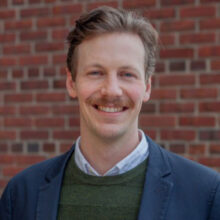
Eric Campbell Associate Principal, Introba
Eric Campbell is an Associate Principal and mechanical engineer with Introba, specializing in high-performance, low-carbon, and climate-resilient buildings. His work spans both building design and policy development, combining mechanical engineering, building performance analysis, passive design, and sustainability strategy. His recent work includes research and project-level design focused on mechanical equipment right-sizing to support cost-effective building electrification and energy transition. He has also contributed to policy and technical work addressing overheating risk and safe indoor temperatures, including leading the compliance analysis study for the City of Toronto’s Maximum Indoor Temperature By-law. Across both design practice and policy development, his work focuses on translating technical analysis into practical measures for more resilient, affordable, and low-carbon buildings.

Rupert Campbell Principal, Montage Development Consultants
Rupert has over 15 years of experience in urban planning, sustainability, Mandarin, and real estate development. His background includes managing development projects from visioning to completion, encompassing feasibility analysis, acquisition negotiations, financial modelling, conceptual design, due diligence, and project structuring, all the way through design development, team management, financing, and construction to final deficiencies and handover. As a trained urban planner, his approach brings together public and private perspectives to city building, with a strong working relationship with Planning Departments, funding agencies, and consultants. Hailing from New Zealand, Rupert brings a unique creativity and jovial cynicism to his team, as well as a bizarre passion for long-fin eels, boxing, and tabletop wargaming.

Lisa Westerhoff Principal Owner, Westerhoff Climate Strategies
Lisa Westerhoff is recognized in British Columbia and across Canada as a focused, reliable leader in energy-efficient and climate-ready building policy and interest holder engagement. With over 10 years of industry experience, Lisa works with local governments, universities, and industry organizations to create policies and strategies for a healthy, low-carbon and resilient built environment. Lisa holds a PhD in urban sustainability from UBC and is the author of several academic publications on strategies for increasing climate change resilience and energy and emissions reductions. She also holds a Master’s degree in climate change resilience and adaptation, is IAP2 certified in public engagement, and a winner of the Canada Green Building Council’s Green Building Champion award.
- Early
- $65
- Regular
- $85
1:00 PM – 2:00 PM
Property manager essentials: capital planning and delivering successful projects
Location: Property Management Learning Lab (Booth 344)
- Property Management & Building Operations
Streams: Building Management & Optimizing Building Performance and Net Asset Value; Economics, Legal, Regulatory & Risk Management
Tracks: Property Management Solutions
Building Types: Commercial, Mixed-Use, Residential: Multi-Unit
Property managers must balance building performance, risk, resident expectations, and budgets. Building Condition Assessments (BCAs) and Depreciation Reports (DRs) provide information on asset condition, maintenance needs, and future capital expenditures. This session focuses on turning assessment findings into practical maintenance and renewal strategies. Participants will explore the purpose and value of BCAs, DRs, and other assessment tools, including how they support risk management, budgeting, and long-term asset management. The session covers interpreting findings, service-life projections, and identifying when further investigation is needed. Topics also include prioritizing recommendations, developing maintenance and capital plans, funding strategies, and managing projects from scope definition and bid through construction and closeout. Attendees will gain an understanding of the role of BCAs and DRs in planning, learn how to turn assessments into actionable projects, and discover best practices for planning, funding, bidding, and delivery.
Speakers

Alex Bouchard Project Engineer, RJC Engineers
Alex brings over 20 years of industry experience preparing building condition assessments for more than 1,200 buildings across Canada, including large-scale portfolio programs for municipalities, utilities, and private clients. His expertise spans structural, architectural, mechanical, and electrical systems, giving him the versatility to lead the inspection teams and evaluate a wide range of facility types.

Arman Mirsanaye Project Engineer, RJC Engineers
Arman brings nearly 10 years of experience in the assessment and restoration of residential, commercial, and mixed-use buildings. He specializes in concrete restoration, waterproofing, plaza and parkade rehabilitation, and capital renewal planning. Arman works closely with strata corporations, property managers, and building owners to develop practical, cost-effective repair strategies and successfully deliver restoration projects from assessment through construction.
- Early
- $65
- Regular
- $85
2:30 PM – 3:30 PM
How oversizing happens: improving mechanical system design in commercial buildings
Location: Rooms 215/216
- Construction & Trades
- Property Management & Building Operations
- Engineering
Streams: Sustainability, Decarbonization & High-Performance Buildings
Tracks: Property Management Solutions
Building Types: Commercial, Institutional, Mixed-Use
Mechanical equipment in commercial buildings is often sized using conservative assumptions, legacy rules of thumb, and layered safety factors. While intended to reduce risk, oversizing can increase capital costs, energy use, equipment cycling, peak electrical demand, and the likelihood that electrification projects require costly electrical upgrades.
This presentation shares preliminary findings from a BOMA BC study examining how heating and cooling equipment sizing decisions are made and where oversizing enters the design and construction process. Drawing on a review of current practices and standards, along with extensive interviews with mechanical and electrical engineers, contractors, equipment suppliers, and commissioning agents, the session will identify key barriers to better sizing. It will also estimate potential savings from reducing oversizing and present policy and program ideas that could help drive industry change.
Speakers

David Ramslie Vice President, Climate & Sustainability, North America, Introba Canada LLC
Dave Ramslie is Vice President of Climate and Sustainability for Introba, North America, where he leads efforts to advance low carbon, resilient buildings, and communities. Over a 20 year career spanning urban planning, public policy, green building, and climate technology, Dave has focused on translating ambitious climate goals into practical strategies for the built environment, with experience in policy development, land use planning, urban design, building decarbonization, and industry transformation. Dave has been inducted into Canada’s Clean50, named a Green Building Champion by the Canada Green Building Council, and recognized by the Natural Resources Defense Council as one of nine global leaders advancing climate action in cities. His contributions to Vancouver’s Greenest City Action Plan have also been recognized by the World Green Building Council and World Wildlife Fund.

Elyse Henderson Market Transformation Sector Lead, Buildings and Power Efficient Design, BC Hydro
Elyse works with government and industry to advance codes, policy, and standards for efficient low-carbon electrification of buildings, transportation, and communities. Previous work includes whole-building energy modelling, emission reduction feasibility studies, and research to inform policy and program development. As a detail-oriented environmental chemist (MSc) by training, she also has expertise in lab testing, complex data analysis techniques, and scientific communication, including grant writing and public presentations.
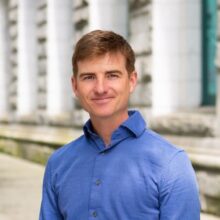
Kevin Cant Program Manager, BOMA BC
Kevin is a program manager with BOMA BC’s Decarb Accelerator program with over 10 years of experience in energy modelling and building performance. His focus with the Decarb Accelerator involves guiding building owners, operators, and managers towards meaningful and cost-effective carbon reductions in their commercial properties.
- Early
- $65
- Regular
- $85
Thursday, February 11
My Cart11:30 AM – 12:30 PM
The financial metrics of depreciation reports
Location: Property Management Learning Lab (Booth 344)
- Property Management & Building Operations
Streams: Economics, Legal, Regulatory & Risk Management
Tracks: Property Management Solutions
Building Types: Commercial, Industrial, Mixed-Use, Residential: Multi-Unit
This presentation examines the financial metrics of depreciation reports. It begins with the Benchmark Analysis as the foundation for reliable financial modelling and explains how it supports consistent reserve fund calculations. A series of 9 financial metrics are included, Fully Funded model, Reserve Adequacy (% Funded), Deficiency/Contribution Quotient, Adequate Contribution Model, Contribution % of Operating Budget, CRF % of Operating Budget, CRF % of Insurable Value, Average Strata Lot/Sq Ft, and Reserve Deficiency Quotient. These metrics are compared to demonstrate the strengths and limitations of different funding methodologies and to identify indicators of financial risk. The final section reviews how strata loans interact with reserve funds and the financial risks that arise during the loan term.
Speakers

Jeremy Bramwell President, Strata Reserve Planning
Jeremy Bramwell, AACI, P. App. (former CRP), has completed Depreciation Reports throughout the province of British Columbia since 2011. Jeremy was a former Board Member of the Real Estate Institute of Canada’s (REIC) Vancouver Chapter and the Chair of the CRP Task Force in BC. Mr. Bramwell has authored articles on Depreciation Reports for CHOA, REIC, REIBC, and VISOA, lectured at CHMC, and written Depreciation Report valuation theory for UBC. He was a member of the BC Housing Policy Branch subcommittee on Depreciation Report legislation. The 2nd edition of his book Depreciation Reports in British Columbia is for sale on Amazon. His goal is to make reports that are understandable to maximize the usefulness of your Depreciation Report. He is one of the most respected experts on Depreciation Reports in BC.
- Early
- $65
- Regular
- $85
2:30 PM – 3:30 PM
What does the lease say? A crash course in commercial leases for property managers
Location: Property Management Learning Lab (Booth 344)
- Property Management & Building Operations
Streams: Building Management & Optimizing Building Performance and Net Asset Value
Tracks: Property Management Solutions
Building Types: Commercial, Mixed-Use
Commercial property managers oversee diverse portfolios of office, retail, industrial, and mixed-use assets, each governed by complex lease agreements. Yet many professionals are expected to administer leases without ever talking about how to interpret or apply them. This practical session is designed to close that gap. Participants will gain a clearer understanding of commercial lease structures, key provisions, and the operational impacts of common lease clauses. Topics include rent calculations, landlord and tenant obligations, security deposits, insurance, assignments and subletting, renewals, holdovers, defaults, remedies, and risk allocation. Using real-world scenarios, the session will explore common disputes before, during, and after a tenancy, with practical approaches to reviewing, tracking, and administering lease across large portfolios. Instead of legal jargons, this session provides practical knowledge that attendees can apply immediately to manage leases confidently.
Speakers

Adriano Silva Director, Property Management, Townline Property Management
Adriano Silva is Director of Property Management and Associate Broker at Townline Property Management, where he leads a team responsible for a diverse portfolio of office, retail, industrial, and residential real estate across British Columbia. He has over 12 years of experience spanning property operations, lease administration, asset management, and team leadership overseeing complex real estate portfolios.
Prior to entering the property management industry, Adriano spent 13 years in fleet management. He holds an MBA and a Master’s Degree in Global Leadership from Fairleigh Dickinson University and is licensed by the BC Financial Services Authority (BCFSA) as a Managing Broker, Rental Property Manager, Strata Manager, and Trading Services Representative.
- Early
- $65
- Regular
- $85